top of page



About Development
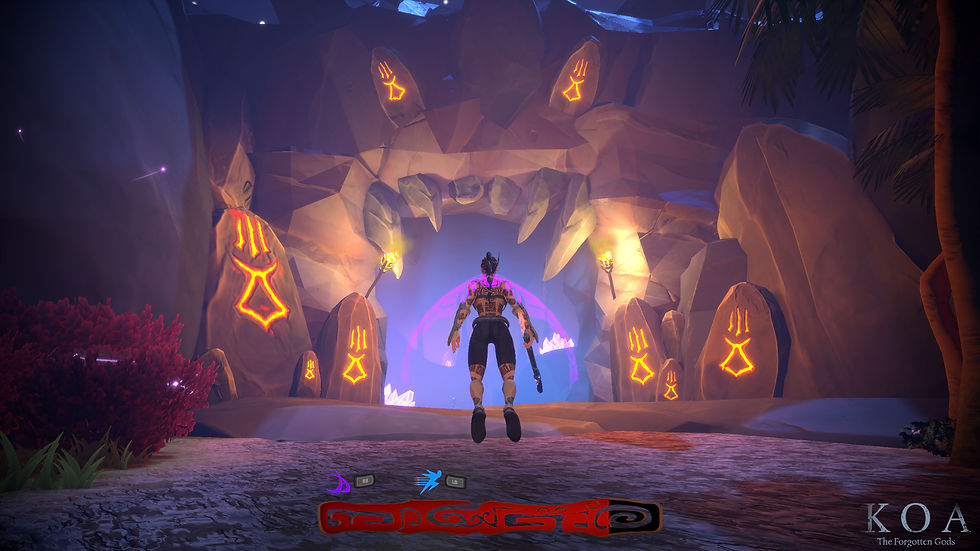
Made in Unity, our team of 4 designers & 3 artists made it in 8 months time with the goal of showcasing our take on fast-paced fluid movement through combat & immersive cinematics.
The game experience
Become Kalena, a Koa warrior pursuing her revenge against the goddess of volcanoes. Travel through Hawaii's mythical island in search of blessings from the forgotten gods to grow your power and defeat the evil Tutu'Pele.
Kalena's movement and combat style quickly became the focus during development. The goal was to keep it fresh by rewarding the player with new abilities as they progress and interesting cinematics that change the pace and provide narrative context to your actions.
Crucially, we needed to strike a good balance between navigation, combat and narrative to keep the experience interesting in spite of our tight budget.

Game inspirations
After searching for a simple combat system that works well with incredible mobility. I landed on Hades.

The combat is quick, intuitive, incredibly permissive and heavily based on movement. Basically everything we needed.
And references for stylish and flowing movement brought me to Solar Ash.

With smooth forces and fluid curves, the skating from Solar ash was a must-have inspiration. Most of our movement systems were adapted from here.

What I did on the project
As a game designer:
-
Hero design:
-
Combat
-
Movement systems
-
Camera systems
-
Defining animations and move timings
-
Respawn
-
Interactions with objects
-
As a technical designer:
-
Hero design:
-
Coded in C# hero movement, abilities, VFX, animations, etc.
-
Took over the input system
-
Cinemachine camera implementation
-
Edited VFX through visual scripting
-
-
Enemy/AI design:
-
Behavior trees
-
Values and balancing
-
Co-developing animations
-
Encounters, scenarios and placement
-
-
Enemy/AI design:
-
Implemented spawning rules
-
Coded in C# every enemy
-
Managed the navmesh
-
Created parameter documentation
-
Linked enemies to the character class for ease of use
-
-
Game systems
-
Designed an auto-targeting system
-
Designed multiple LD objects
-
Designed the progression curve
-
Designed many UI elements
-
-
Game systems
-
Documented and scripted the auto-targeting system with our part-time programmer
-
Coded those LD objects
-
Coded tools that solve other designer's problems
-
Coded and connected those UI elements
-

Enemy AI Behaviors
For enemies, I proposed the classic trinity of ranged, melee and tank. The archetype felt similar to Hades and familiar to players.
Melee tikis have moderate health and provide a comfortable challenge to take on when presented individually. They focus on:
-
Provide manageable pressure for the player to learn exotic movement systems
-
Punishing the player when they don't navigate effectively
-
Synergizing with Ranged. Mindlessly chasing the player creates space to move aroudn.

Ranged tikis have very low health, low damage and provide an easy challenge for the player to overcome. They are introduced before the player obtains the dash, teaching basic movement. They focus on:
-
Light pressure in a straight line for players to learn to strafe
-
Jump back is largely ineffective, but reinforces the momentum and adds an opportunity to orbit around.

The shield tikis are where the real challenge lies. Their design intent is to push the player to use everything they've learned to a maximum. They focus on:
-
Shielding from damage from the front, leaving their back exposed
-
Damage opportunities are scarce and require the player to use their tools effectively.
-
Short recovery times


Player Character
With the above references, we've got a basic idea of what we want: simple combat and flowing movement... so what could possibly go wrong?
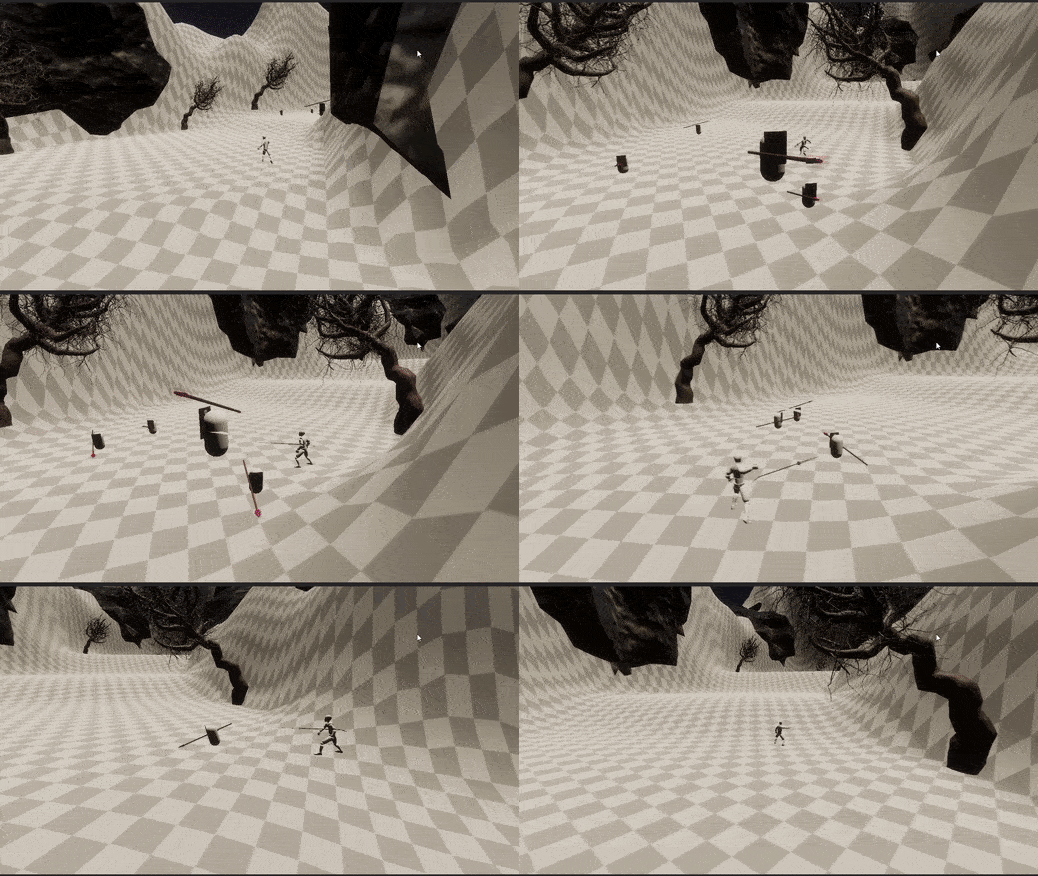
A lot. Obiously. The character was wildly uncontrollable and could never be hit by enemies. On top of that, we quickly realized that such a quick combat pace was unsustainable and kind of boring.
So how did you fix it?
Thanks for asking :)
To address the problems, I decided to reign in the speed and implement the Orbital System. It does the following:
-
Adds adaptive forces that keep the player at an optimal distance from the target.
-
Limit character rotation speed to create a perfect rotation every time.
-
Adds forward momentum when attacking for that feeling of power.
The abilities also played a role in the gameplay experience. Because the combat is tied to the movement, creating and then closing space during combat was crucial. Here is what they do:
-
Tidal dash: Kalena dashes in the chosen direction instantly. This can also be used to launch yourself from the jump pads.
-
Divine impact: Kalena raises herself into the air before momentarily slashing her spear in a wide arc, smacking enemies away from herself and interrupting them.
-
Hex flash: Kalena enters an offensive position before lunging towards an enemy at blinding speeds. This move does heavy damage and stuns the target enemy.
Technical challenges
The lockon system, our targeting assistant, was a collaboration between our part-time programmer and myself. We worked together to define the following:
-
How do these states transition to one another?
-
What do I need to implement in engine for this to work?
-
How do we concretize my design intentions into the system?
-
What's the most effective way of uniting all related elements?


Developing animations alongside the animator was also part of my responsibilities. On top of that, I was also the one to integrate them into the code and Unity's animation systems with transitions and all.
Because I was responsible for most things hero related, I felt it was appropriate to document values and parameters for my fellow designers to do their own testing in their areas of the game.


I coded most of the game and designed central elements, I also acted as a technical designer responsible for informing and tooling my fellow designers for best practices.
The tooling included scripts that assisted in management of events such as cinematics or multi-use triggers.
bottom of page